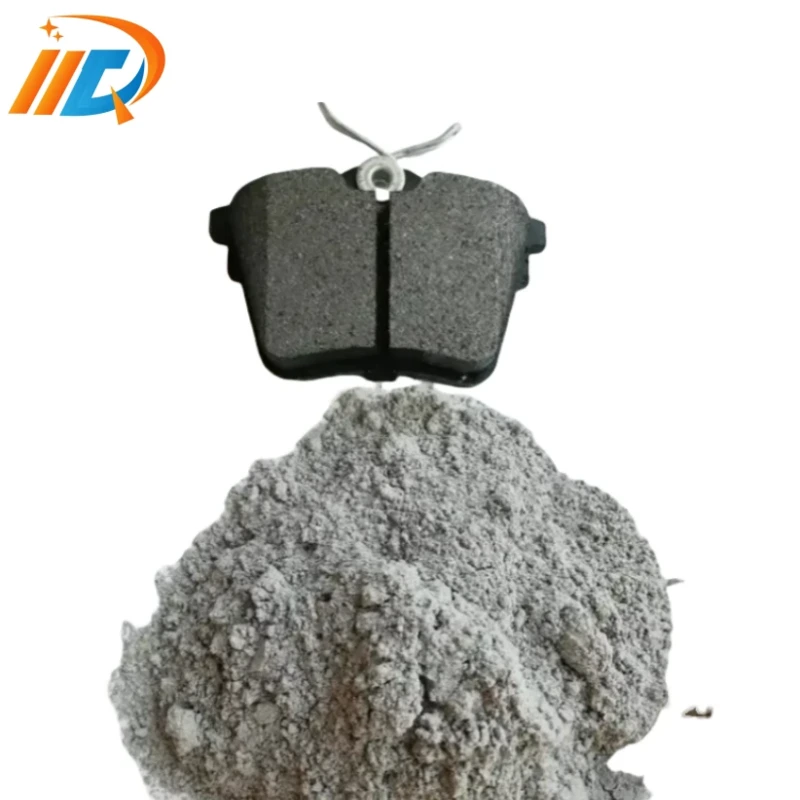
Traditional Brake Pads Contain Asbestos
In the past, many automotive brake pads contained asbestos. Asbestos is a naturally occurring fibrous mineral that has good heat resistance, abrasion resistance and mechanical strength. Due to these properties, it was widely used in the manufacture of brake pads and could help vehicles withstand high temperatures and friction during braking.
Asbestos hazards led to its phasing out
However, asbestos is a known carcinogen. When asbestos fibres are released in the air and inhaled by the body, they can be deposited in the lungs, and long-term accumulation may lead to serious diseases such as asbestosis, lung cancer and mesothelioma.
With the increasing awareness of the hazards of asbestos, many countries and regions have begun to gradually ban the use of asbestos in friction materials such as automotive brake pads.
Most modern car brake pads do not contain asbestos
Today, the mainstream materials used in automotive brake pads no longer contain asbestos. Instead, materials such as semi-metallic, ceramic, and organic (non-asbestos organic) are used.
Semi-metallic brake pads contain metal fibres (e.g. steel fibres) and other additives for good braking performance and heat dissipation, and are suitable for high-performance vehicles and some heavy-duty vehicles. Ceramic brake pads are composed of ceramic fibres, fillers and binders, etc. They have stable braking performance, low noise and produce less dust, and are widely used in many ordinary cars and high-end vehicles. Organic brake pads, on the other hand, are made from a variety of organic fibres and binders, and are relatively inexpensive, with braking performance that meets the needs of the average vehicle.
In conclusion, although most modern car brake pads are no longer asbestos-free, asbestos-containing brake pads may still be found in some older cars or non-compliant products, so when repairing and replacing brake pads, you should choose products that meet safety and environmental standards.