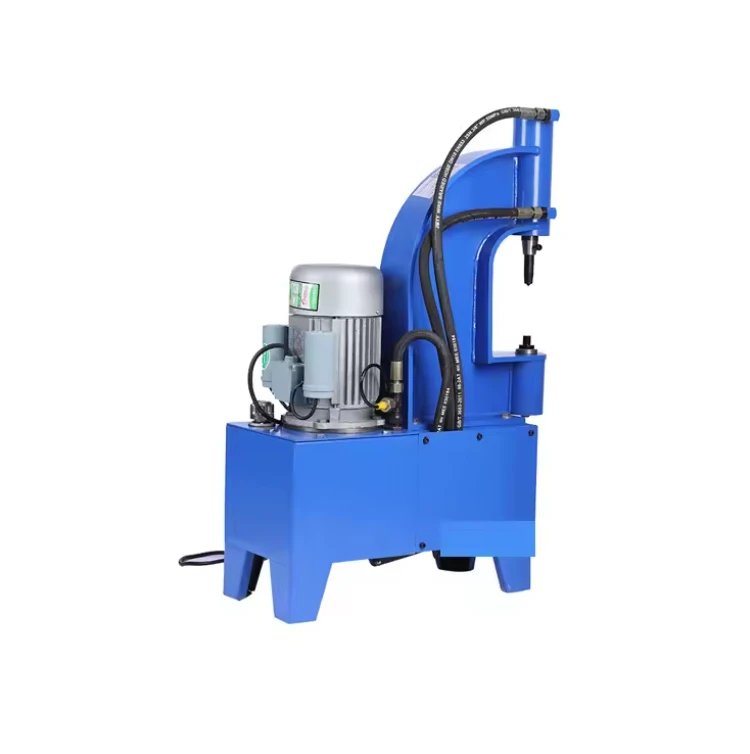
The comparison of the firmness of riveting and welding cannot be simply generalized. It depends on many factors, including material type, connection structure, load type and environmental conditions.
1. The influence of material factors on firmness
Riveting
For different materials, the firmness of riveting is different. When connecting metal materials, such as aluminum alloys, the material selection of rivets is very important. If rivets with good compatibility with aluminum alloys, such as aluminum rivets, are used, better connection strength can be provided. However, for some high-strength alloy steels, due to the high hardness of the material, riveting may cause stress concentration around the rivet holes, affecting the firmness of the connection.
Welding
Welding also has different adaptability to materials. Some materials with good weldability, such as low carbon steel, can obtain very high-strength joints after welding. However, for some special materials, such as aluminum alloys, defects such as pores and cracks are easily generated during welding, which will reduce the firmness of the welded joints. In addition, different welding methods are also suitable for different materials. For example, argon arc welding is suitable for welding materials such as stainless steel and aluminum alloys, while for cast iron materials, arc welding may be more suitable.
2. The effect of load type on firmness
Riveting
Riveting performs well in withstanding shear force. For example, in the frame connection of railway vehicles, riveting can effectively withstand the shear force generated by the vehicle during operation. However, when subjected to tension, especially for a single rivet, if the tension is too large, the rivet may be pulled out or the rivet hole may be deformed, causing the connection to fail.
Welding
Welding can withstand many types of loads, including tension, pressure and shear. In the manufacture of pressure vessels, welded joints need to withstand internal pressure (pressure load) and the weight of the vessel itself and external impact (tension and shear force) at the same time. As long as the welding quality is good, the welded joint can effectively transfer these loads to ensure the safety of the vessel.
3. The effect of environmental conditions on firmness
Riveting
The riveted connection structure can resist vibration and impact to a certain extent. In the shell connection of some mechanical equipment, riveting can maintain the stability of the connection under the vibration environment generated by the operation of the machine. Moreover, riveting is not easily affected by the corrosive environment because the rivet and the connected parts are mechanically connected, and even if the surface coating is damaged, it is not easy to produce electrochemical corrosion like welding.
Welding
Welded joints may be affected in harsh corrosive environments. For example, in marine environments, if welded steel structures do not have good anti-corrosion measures, electrochemical corrosion is prone to occur at the welds, resulting in a decrease in the strength of the welded joints. However, by adopting appropriate welding processes and anti-corrosion measures, such as the use of corrosion-resistant welding materials and coatings, the strength of welded joints in corrosive environments can be improved.
In summary, under appropriate conditions, both welding and riveting can provide sufficiently strong connections. Welding may be a better choice when high-precision, high-strength overall structures are required and the material has good weldability; riveting may be more advantageous in connections that need to withstand shear forces, have a certain tolerance to vibration and impact, and in some difficult-to-weld material connections.