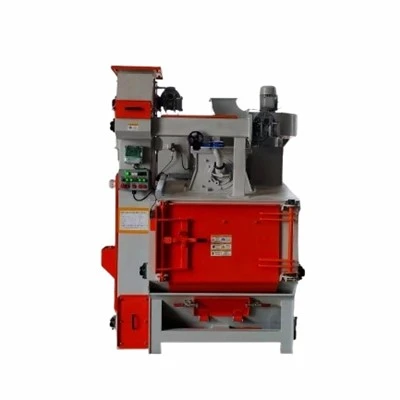
Working Principle
Sandblasting machine:
It uses compressed air to spray abrasives (such as quartz sand, corundum sand, etc.) onto the surface of the workpiece at high speed through a spray gun. Driven by the high-speed airflow, the abrasive impacts and cuts the surface of the workpiece, thereby removing impurities such as rust, oxide scale, old coating, etc., on the surface, or roughening the surface of the workpiece to improve the adhesion of subsequent coatings.
Shot blasting machine:
It uses compressed air or mechanical centrifugal force to make the projectiles (usually steel shots, glass shots, etc.) hit the surface of the workpiece at a high speed. However, the main purpose of shot peening is not cutting, but to cause plastic deformation of the workpiece surface through the impact of the projectiles to form a compressive stress layer. This compressive stress layer can effectively improve the fatigue resistance and corrosion resistance of the workpiece.
Abrasive/Shot Features
Sandblasting machine:
The abrasive particles are irregular in shape and have edges and corners. This allows the abrasive to effectively cut and scrape the workpiece surface using the edges and corners to remove the material. Common abrasives include garnet sand, brown corundum sand, etc., and their particle size can be selected according to the requirements of the workpiece surface treatment.
Shot blasting machine:
The projectiles are generally spherical, so that when they hit the workpiece surface, they can better produce uniform plastic deformation on the workpiece surface without causing excessive scratches on the workpiece surface like angular abrasives. Steel shots have a higher hardness and are suitable for shot peening workpieces with higher hardness; glass shots are relatively soft and are often used for workpieces with higher surface accuracy requirements, such as aerospace parts.
Application range
Sandblasting machine:
Widely used in pre-treatment work such as rust removal, paint removal, oxide skin removal, surface cleaning, etc., on metal and non-metal surfaces. In the construction industry, it is used to clean the surface of stone to make its texture clearer; in mechanical manufacturing, it is used to clean the surface of castings and welded parts to remove burrs and impurities.
Shot blasting machine:
Mainly used to improve the fatigue strength and corrosion resistance of metal parts. Commonly used in the manufacture of parts in the aerospace field, such as aircraft engine blades, landing gear, and other key components; in the automotive industry, it is used to process engine crankshafts, connecting rods, and other parts to enhance their service life.
Surface state of the workpiece after processing
Sandblasting machine:
Due to the cutting action of abrasives, the surface of the workpiece will form relatively obvious micro-cutting marks, and the roughness is relatively high. However, this roughness can be controlled by selecting appropriate abrasives and process parameters. For example, in the surface treatment of some decorative workpieces with high requirements for appearance, further polishing and other subsequent treatments will be carried out after sandblasting.
Shot blasting machine:
The surface of the workpiece mainly produces tiny pits, and the overall surface is relatively flat and smooth. This is because the impact of the projectile causes plastic deformation of the workpiece surface material, rather than a large amount of material removal like sandblasting. The surface roughness of the workpiece after shot peening increases less, which is more conducive to maintaining the dimensional accuracy and appearance of the workpiece.