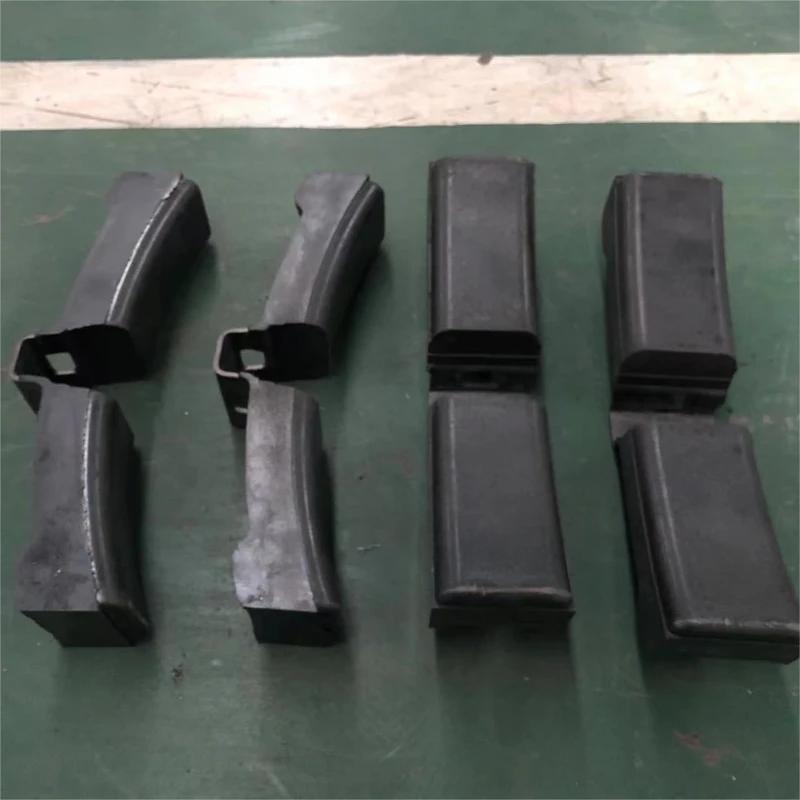
Train brake blocks are usually made of a variety of materials to meet different performance requirements and working conditions, common materials include the following:
1. cast iron
Composition: mainly composed of iron, carbon, silicon and other elements, according to different performance requirements, may also add manganese, phosphorus, sulfur and other elements.
Characteristics: It has good wear resistance, compressive strength and thermal stability, and can maintain good braking performance at higher temperatures. The cost is relatively low and the process is mature, so it is more widely used in traditional train brake blocks.
2.Synthetic materials
Composition: Generally take resin as the matrix, add various fibres (such as glass fibre, carbon fibre, etc.), fillers (such as talc, calcium carbonate, etc.) and friction performance modifiers (such as graphite, molybdenum disulphide, etc.).
Characteristics: The formula and process can be adjusted to meet different braking needs, with good friction performance, less noise generated during braking, and relatively less wear on the wheels. At the same time, the synthetic materials are lighter in quality, which helps to reduce the overall weight of the train and improve the operating efficiency.
3. Powder metallurgy materials
Composition: usually made of metal powder (such as iron, copper, nickel, etc.) and non-metallic powder (such as graphite, ceramic powder, etc.) through the powder metallurgy process.
Characteristics: High hardness, strength and wear resistance, able to withstand greater braking pressure and heat. Under high temperature, the performance stability of powder metallurgy brake block is better, which can ensure reliable braking effect. It is suitable for high-speed trains and heavy-duty trains and other occasions that require high braking performance.
In addition, there are some new materials are also gradually used in the field of train brake blocks, such as ceramic matrix composite materials. These materials have higher high temperature resistance, better friction performance and longer service life, but the cost is relatively high, and is not yet widely popularised.