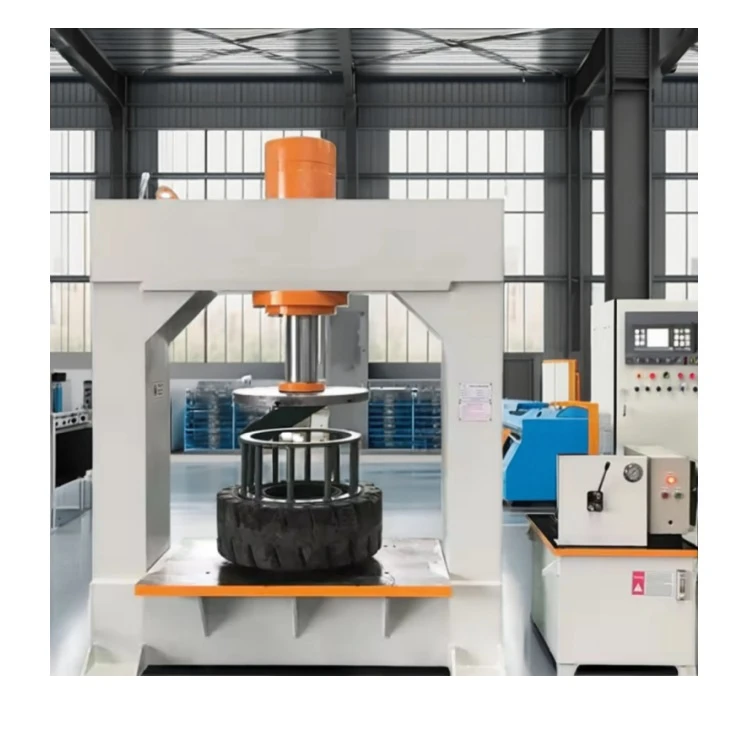
Tire press is a kind of equipment specially used to operate on tires during tire mounting and dismounting, how to choose the right tire press? The following points will be explained in detail.
1. Types and size ranges of tires
Automotive tires: If used primarily for mounting and removing automotive tires, choose based on the size of common automotive tires. Typical car tires are between 14 - 18 inches in diameter, and SUV tires may be up to about 20 inches in diameter. Tire presses need to be able to cover these common sizes, and their clamps need to be able to hold rims of different widths securely. For example, some presses have clamps that can be adjusted in widths ranging from 4 - 10 inches, which will accommodate most family car tires.
Motorcycle Tires: Motorcycle tires are relatively small, typically between 10 - 18 inches in diameter, and have a different tire profile and rim structure than automotive tires. For situations where motorcycle tires are the primary concern, the press fixture needs to be specifically designed to accommodate the special shape of the motorcycle rim, such as some sport motorcycle rims that are multi-spoke in design, requiring a more delicate fixture to avoid rim damage.
Construction vehicle tires: Construction vehicles such as loaders and excavators have huge tires that can be over 40 inches in diameter and are very thick. In this case, it is necessary to choose a press with a high pressure output, often hydraulic presses are preferred, with pressures that can reach several tons or more, and clamps that are large and strong enough to withstand the weight and pressure of the huge tires.
2. Pressure system types and parameters
Comparison of hydraulic and pneumatic systems:
Hydraulic tire presses have high and stable pressure and are suitable for large and heavy tires. Hydraulic systems are capable of generating a constant and stable pressure, which is more advantageous when mounting and dismounting large engineering tires or difficult automotive tires. For example, some hydraulic tire presses can reach a maximum pressure of 10 - 20 tons.
Pneumatic tire presses are quick to respond and relatively flexible in operation, making them suitable for smaller, lighter tires, such as motorcycle tires. Pneumatic systems build up pressure quickly and can be operated more quickly when dealing with smaller tire sizes, but pressures are generally relatively low and may be around 1 - 3 tons maximum.
Pressure Adjustment Range: Both hydraulic and pneumatic systems require a suitable pressure adjustment range. For application scenarios with a wide range of tire sizes and types, the pressure adjustment range of the tire press should be wide enough. For example, a tire press with a pressure adjustment range of 0.5 - 10 tons can accommodate operations ranging from motorcycle tires to medium-sized automotive tires.
3. Operation control system
Convenience of operation: Choose a control system that is simple and intuitive to operate. The buttons on the control panel should be well laid out for quick understanding and operation by the operator. For example, there are clear "Install" and "Remove" buttons, as well as knobs for pressure adjustment, so that the operator can easily get started.
Degree of automation: Consider the degree of automation based on actual needs. For high-volume tire mounting and dismounting locations, such as large tire sales and after-sales service centers, a tire press with a high degree of automation can improve work efficiency. For example, some tire presses can automatically complete a series of steps in tire mounting through a preset program, including fixing the rim, applying pressure, and loosening the clamps.
Safety features: safety features are essential. There should be an emergency stop button, so that the operator can immediately press the stop button when there is an unexpected situation, such as the sudden popping of the tire or abnormal pressure. At the same time, some tire presses are equipped with guard rails, light curtain sensors, and other devices to prevent the operator from coming into contact with dangerous areas.