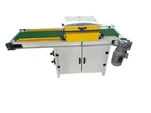
Shot peening and concrete grinding are two different methods of concrete surface preparation, and they each have their own advantages and disadvantages, making it difficult to simply say which method is better. The following is a comparison of them:
I The treatment effect
Shot blasting
Surface roughness: Shot blasting blasts projectiles (e.g., steel shot, glass beads, etc.) onto the concrete surface by means of a high-speed rotating impeller, which is able to form uniform, regular and tiny craters on the concrete surface, thus producing a desirable roughness. This roughness helps to enhance the adhesion of coatings, flooring materials, etc. to the concrete surface.
Cleaning effect: During shot blasting, the impact of the projectile not only removes slurry, dust and loose particles from the concrete surface, but also removes some surface oil and impurities. This is because the impact of the projectile can shock these pollutants from the pores of the concrete and take away, making the surface cleaner. For some concrete structures that are exposed to the outdoors for a long period of time, such as bridges and car parks, the cleanliness after shot peening can meet the requirements for subsequent high-quality painting or repair.
Concrete Polishing
Surface Flatness: Concrete Polishing mainly focuses on smoothing the concrete surface and reducing the unevenness. For some places that require high precision flatness, such as indoor high-precision machine room floors, precision instrument production workshop floors, etc., through the use of different mesh grinding discs for grinding, the concrete surface can be made to achieve a very high degree of flatness.
Appearance effect: The surface of the concrete after grinding usually shows smooth texture and has good aesthetics. In some occasions with high requirements for building appearance, such as shopping malls, exhibition halls and other indoor floors or walls, polished concrete can show a simple, modern industrial style. However, the control of surface roughness by grinding is relatively weak, and additional treatment measures may be required for situations where enhanced coating adhesion is required.
II. Efficiency
Shot Peening
Shot peening equipment usually has a high processing speed and is able to cover a large area in a short period of time. This is because the working principle of the shot blasting machine is to mechanically eject projectiles, and the range and speed of ejection can be adjusted according to the parameters of the equipment, which is suitable for the surface treatment of large areas of concrete.
Concrete Grinding
The efficiency of concrete grinding is relatively low, especially when dealing with large areas or concrete with poor surface conditions. This is because the grinding process needs to be fine-tuned by gradually using abrasive discs of different grits, and the working speed of the grinding equipment is relatively slow. It takes more time and manpower if a high levelling and quality standard is to be achieved.
III. Scope of application
Shot Peening
Shot blasting is widely used in industrial plants, car parks, bridges, airport runways and other concrete structures that require enhanced surface adhesion and cleanliness. Shot blasting is a very effective method for concrete surfaces with a lot of oil and slurry on the surface, or concrete surfaces that need to be painted or anticorrosion treated.
Concrete Polishing
Concrete grinding is mainly applied to indoor places that require high surface flatness and appearance effect, such as shopping malls, exhibition halls and machine rooms. In some places with very high requirements for ground bearing capacity, such as the ground of heavy-duty industrial plants, grinding can better ensure the flatness of the ground, which is conducive to the installation and operation of equipment.