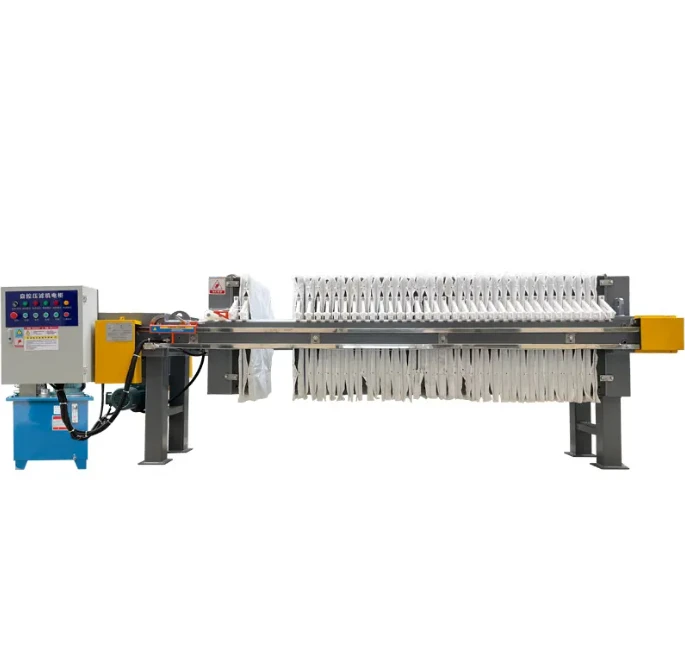
Plate and frame filter presses are widely used in filtration equipment for dewatering materials through plate-frame compression and filter cloth filtration. Selecting the right model requires careful consideration of critical factors that impact operational efficiency and long-term performance. Below are essential selection guidelines:
1. Automated Plate Movement Mechanism
The automation level of plate movement is a pivotal selection criterion. Prioritize models with automated or semi-automated operational capabilities tailored to technical requirements. Such systems significantly reduce manual labor, enhance efficiency in extended or large-scale filtration operations, and minimize human errors or equipment failures caused by manual intervention.
2. Filter Cloth Configuration and Performance
An integrated oscillation mechanism is indispensable for smooth operation, as it ensures easy detachment of filtered cakes and prevents clogging. While plate and frame filter presses are bulky compared to other types, their robust design makes them ideal for applications like industrial wastewater treatment when properly sized.
Filter Cloth Material Selection
Durability: Ensure the cloth's tensile strength meets operational demands.
Material Compatibility: Choose corrosion-resistant fabrics (e.g., polypropylene or PTFE) for chemically aggressive slurries to extend service life and maintain filtration efficiency.
3. Cake Solid Content and Moisture Ratio
The dewatering performance of a filter press is measured by the solid contet of the cake and its moisture ratio. Plate and frame models excel in producing high-solid-content cakes with low moisture, making them ideal for space-constrained facilities requiring efficient solid-liquid separation.
4. Frame Robustness and Core Component Quality
Frame Construction
The frame must be fabricated from high-strength alloy steel or equivalent materials to withstand prolonged high-pressure operation without deformation. Durability directly impacts equipment lifespan and reliability.
Core Components
Filter Plates: Select materials (e.g., polypropylene, rubber-coated, or stainless steel) compatible with process media to prevent corrosion or wear.
Filter Cloth: Ensure compatibility with slurry properties (e.g., particle size, chemical resistance) to optimize filtration cycles and reduce maintenance.
Why Choose a Plate and Frame Filter Press?
- Superior dewatering efficiency for high-solid cakes.
- Adaptability to viscous, fibrous, or abrasive slurries.
- Cost-effective for industries like wastewater treatment, mining, and chemical manufacturing.