


There are mainly the following types of brake pad testing machines:
1. Categorized by test performance
Shear strength testing machine: It's used to detect the shear strength of disc and drum brake pads, in line with relevant national standards such as "GB/T 22308-2008" "GB/T22309-2008". There are two common types: vertical and horizontal, vertical is more common, horizontal is mostly customized
Friction and wear tester: It's used to test the friction and wear performance of brake pads and friction materials, and it can implement GB 5763, GB 5764 and other standards. Such as DMS brake pad friction and wear tester, DMW-2 microcomputer-controlled fixed-speed friction tester, etc., which can simulate the friction conditions of brake pads in actual use, and measure the coefficient of friction, wear rate and other indicators.
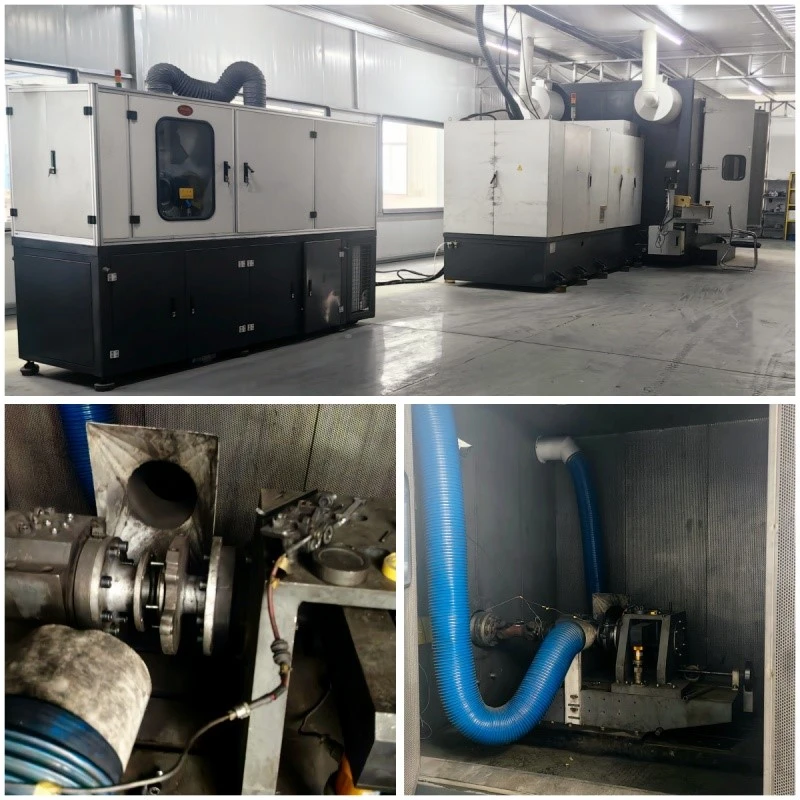
Fatigue testing machine: It's mainly used to evaluate the fatigue performance of brake pads during repeated braking, and to detect the fatigue life and crack expansion of brake pads by applying cyclic load or simulating braking cycles, so as to ensure that the brake pads can maintain stable performance in long-term use.
Thermal recession tester: It's specially used to study the performance change of brake pads under high temperature, simulate the braking effect, friction coefficient change, and wear when the temperature of brake pads rises sharply under the working conditions of continuous braking or high-speed braking, etc., to help analyze the thermal stability and thermal recession characteristics of brake pads.
2. Classification according to the control mode
Microcomputer control testing machine: computer as the core control unit, through the special measurement and control software to achieve accurate control of the test process and data acquisition and analysis. Real-time display of test force, displacement, deformation and other parameters and test curves, automatic loading, automatic shift, automatic zero and other operations, but also has a variety of protection functions, such as overload protection, limit protection, etc., easy to operate, high test accuracy.
Electronic testing machine: It adopts electronic measurement and control technology to measure parameters such as test force and displacement through electronic sensors, and the electronic control system realizes the control of the test process. It has the advantages of high precision, fast response speed, good stability, etc. It can carry out a variety of mechanical performance tests, such as tensile, compression, shear, peeling and so on.
Manual testing machine: The test force is applied by manually operating the loading device, and the parameter measurement and recording in the test process need to be completed manually. The structure is simple and the cost is low, but the test precision and efficiency are relatively low, which is suitable for some brake pads with low precision requirement or simple performance test.
3. Classification according to the loading method
Hydraulic loading test machine: The pressure generated by the hydraulic system to apply the test force, with a large loading force, loading smooth, control accuracy and other advantages, able to simulate a variety of complex braking conditions and load conditions, commonly used in large brake pads or higher requirements for the loading force of the test.
Mechanical loading test machine: Through the motor, reducer, screw and other mechanical devices to realize the loading, the structure is relatively simple, easy to operate, low cost. But the loading force and loading speed is relatively limited, suitable for some of the loading force requirements are not high, the test precision requirements of the general occasion.
Pneumatic loading test machine: Compressed air as a power source, through the pneumatic components to achieve loading. Has the advantages of fast loading speed, sensitive response, clean and non-polluting, but the loading force is relatively small, generally used for lower requirements on the loading force, the need for rapid loading and unloading of the test.
If you have any questions, pls feel free to contact me via mobile +86 13507194818,Always ready to answer your questions !


