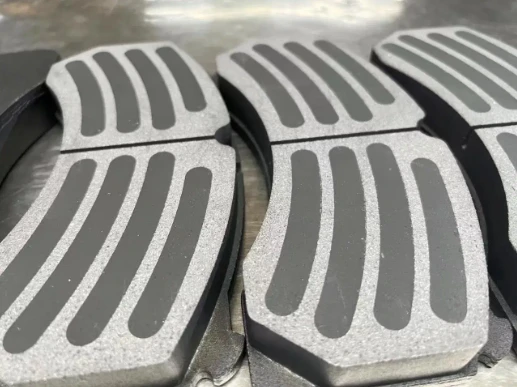
Understanding the phenomenon of 'brake pad frost'
Brake pad frosting is not really frost (like water freezing), but rather a white, frost-like substance that appears on the surface of the brake pads. This white substance may be caused by the precipitation of certain components of the brake pad material (e.g. metal salts) under certain conditions, or it may be caused by a chemical reaction on the surface of the brake pads when they are exposed to moisture for a long period of time.
Fixes for mild frosting conditions
To clean the surface of the brake pads, here are the cleaning steps:
1. Firstly, make sure the vehicle is in a safe parking position, pull up the handbrake or use the gear (for manual vehicles) to prevent the vehicle from moving.
2. Remove the tyres (in the case of disc brakes) to gain better access to the brake pads. For drum brakes, you need to dismantle the brake drum first.
3. Use a special brake cleaner. This cleaner is effective in dissolving and removing dirt, grease and slightly frosty substances from the surface of the brake pads. Spray the cleaner evenly on the surface of the brake pads, taking care not to let the cleaner come into contact with other rubber or plastic parts of the vehicle, as some cleaners may cause damage to these parts.
4. Allow the cleaner to remain on the surface of the brake pads for a few minutes to allow it to fully dissolve. Then, use a clean, soft-bristled brush (such as a toothbrush) to gently brush the surface of the brake pads to remove the frosted material. Be careful not to damage the friction material of the brake pads.
5. Wipe the surface of the brake pads with a clean rag to remove the detergent and dissolved dirt. You can change several rags until there is no more stain on the rag.
6. Check and adjust brake components
After cleaning the brake pads, check that the brake calipers (for disc brakes) or brake shoe return devices (for drum brakes) are working properly. If the caliper piston does not return properly or the return mechanism is defective, the brake pads may rub excessively against the discs or drums, resulting in abnormally high temperatures, which in turn accelerates the production of frosted material.
For disc brakes, check that the sliding pin of the brake caliper slides freely. If the sliding pins are stuck, the brake calipers will not operate properly, causing uneven wear on the brake pads and possible frosting. The sliding pins can be lubricated with special grease (e.g. silicone-based grease) to ensure that they slide smoothly.
It is also important to note that if the brake pads have frosted so badly that the friction material on the surface has been severely damaged or the frosted material cannot be removed by cleaning, then the best course of action is to replace the pads.