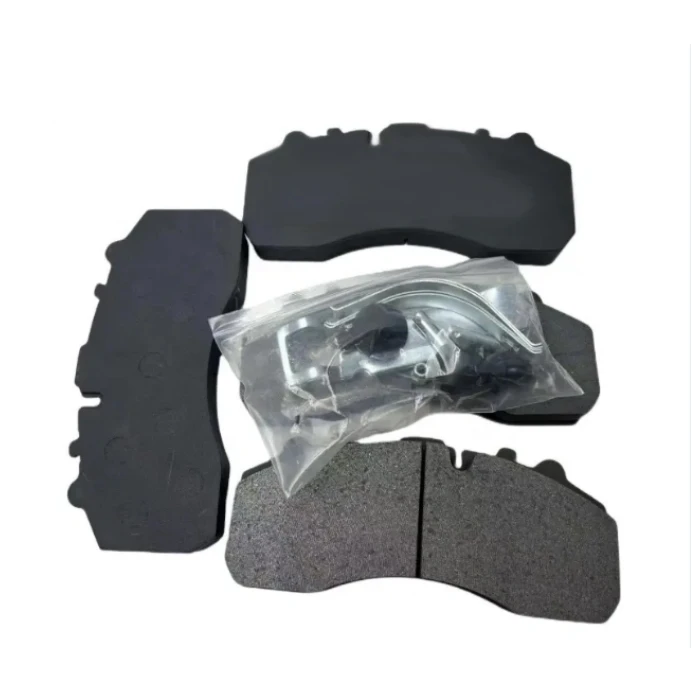
The service life of truck brake pads is not a fixed value, it will be affected by the following factors.
Driving habits
Frequent braking: If a truck driver uses brake braking frequently, the brake pads will be in high temperature and high friction state for a long time, and the brake pads may need to be replaced in tens of thousands of kilometres or even shorter distance.
Sharp braking: Sharp braking also wears brake pads very badly. When the driver suddenly and vigorously presses the brake pedal, the brake pads will be subjected to a huge friction force in an instant, and this impact will make the brake pads wear much higher than normal braking conditions. For example, while normal braking may wear the brake pads by a few microns at a time, a single hard brake may cause tens of microns or more of wear.
Vehicle Load
Heavy load conditions: the heavier the load on the truck, the more braking force is required to apply the brakes, and the more pressure and friction the brake pads are subjected to. A fully loaded truck can wear its brake pads several times faster than an empty truck under the same braking conditions.
Long-term heavy-duty driving: If a truck is driven under heavy load for a long period of time, the life of the brake pads will be greatly reduced. In this case, brake pads may need to be replaced after 30,000 - 50,000 kilometres, depending on the design of the braking system, the material of the brake pads and other factors.
Driving conditions
Rough road conditions: Driving on rough, muddy or gravelly roads will cause the brake pads to be easily affected by foreign objects, which will cause bumps in the road, causing the brake system to be subjected to frequent additional vibrations and shocks, and also accelerating the wear and tear of the brake pads.
Motorway driving: Comparatively speaking, when driving on motorways, if traffic is smooth and the driver does not need to brake frequently, the wear on the brake pads will be less. In this ideal situation, brake pads may last up to 100 - 150,000 kilometres or even longer.
Brake pad material
Semi-metallic brake pads: These brake pads contain a large number of metal fibres, are strong and stable and can withstand high temperatures and pressures. Their service life is generally around 50,000 - 80,000 kilometres, but they have the disadvantage that they can produce a high level of noise during braking.
Ceramic brake pads: Ceramic brake pads have good wear resistance, resistance to high temperatures and low noise levels. It has a relatively long service life, usually up to 80 - 120,000 kilometres. However, ceramic brake pads are generally more expensive than semi-metallic brake pads.
Brake System Design and Maintenance
Brake system design: Advanced brake system design can distribute braking force more efficiently and reduce excessive localised wear of the brake pads. For example, some truck brake systems with electronic brake force distribution (EBD) can automatically adjust the braking force of the front and rear wheels according to the vehicle load and driving status, so as to make the brake pads wear more evenly, thus prolonging the service life of the brake pads.
Regular maintenance: Regular inspection and maintenance of the brake system will also affect the life of the brake pads. If the brake fluid in the brake system has not been replaced for a long time, it will lead to a decline in braking performance, which in turn affects the normal use of brake pads. In addition, timely cleaning of oil, dust and other impurities on the surface of the brake disc and brake pads will also help to extend the service life of the brake pads.
The service life of truck brake pads is generally around 30,000 - 150,000 kilometres, but the specific service life needs to take into account the various factors mentioned above. In order to ensure driving safety, you should regularly check the thickness of the brake pads and replace them when they are worn to a certain extent.