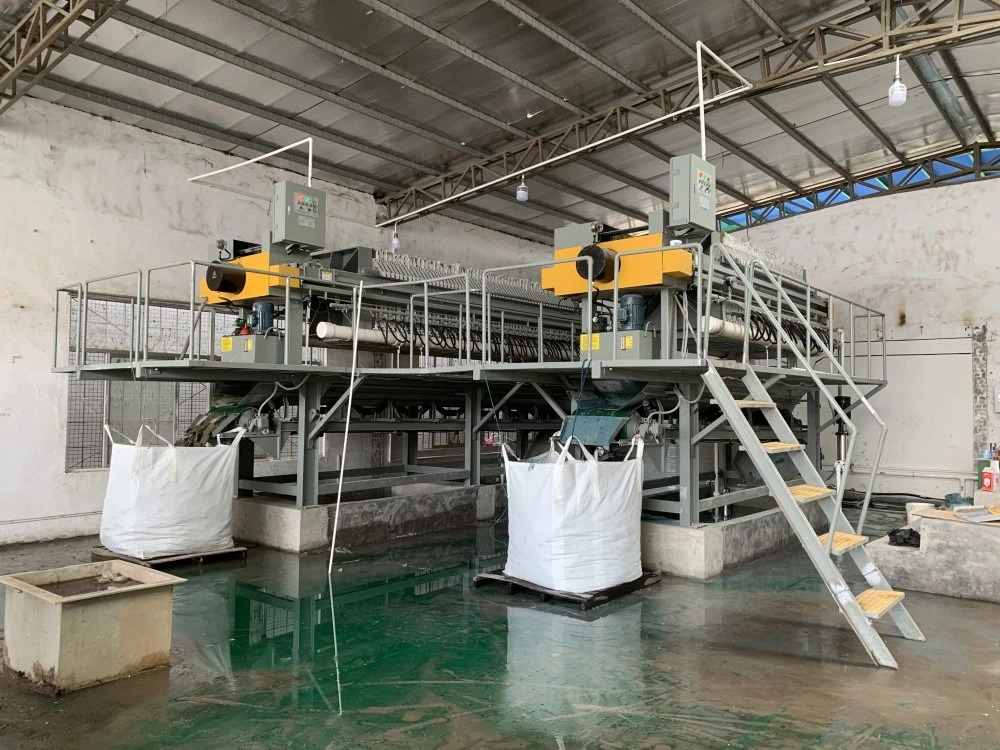
Choosing the right chamber filter press is critical for ensuring efficient solid-liquid separation in a variety of industries, from wastewater treatment and chemical processing to food production and pharmaceuticals. A well-matched machine can significantly reduce operating costs, improve filtration efficiency, and extend equipment life.
Below are the essential factors to consider when selecting a filter press system for your application.
1. Match Frame Size to Filtration Area and Capacity Needs
The frame size of a filter press directly corresponds to its filtration area and overall processing volume. Use daily sludge output and solid content levels to estimate the required filter chamber capacity. Common specifications include:
- Model 630: 10–30 m² filtration area
- Model 800: 30–60 m² filtration area
- Model 1000: 80–120 m² filtration area
- Model 1250: 120–250 m² filtration area
- Model 1500: 300–500 m² filtration area
Pro tip: The filtration area determines the volume of the filter chamber, which directly affects how much sludge the system can handle per cycle. Always base your choice on real-world water treatment volumes and sludge content.
2. Filter Cloth Selection: Material & Performance Metrics
Choosing the right filter cloth is as important as selecting the machine itself. The cloth material and its filtration characteristics must suit your specific application.
Material Options:
Polyester (PET): Excellent resistance to acid and alkali; withstands temperatures up to 130°C. Ideal for chemical and municipal wastewater.
Polypropylene (PP): Good resistance to acid and weak alkali; temperature resistance up to 90°C. A budget-friendly option for food processing and light industry.
Performance Indicators:
Air Permeability: Measured under a 200 Pa pressure differential in L/min per dm². Higher permeability often translates to faster filtration but must balance with solid retention.
Mesh Count: Reflects the number of threads per inch but does not directly indicate filtration accuracy. Consider both mesh count and pore size when evaluating cloth efficiency.
3. Automation Options: Balancing Efficiency and Labor Costs
Automation level is a key factor, especially when considering labor availability and cycle frequency.
Large-Scale Systems (1000 model and above): Prioritize automatic plate shifting systems to minimize manual handling and improve operational efficiency.
Compact Models (630–800): Manual or semi-automatic plate shifting is often sufficient and offers a better cost-performance balance.