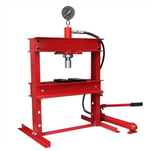
Punching machine is a stamping press, its working process involves power input, transmission conversion, stamping execution and control of a number of links, the following is a detailed introduction to its working principle and process:
Power system
The press is usually powered by an electric motor. After the electric motor is connected to the power supply, it converts the electric energy into rotary mechanical energy and outputs continuous rotary motion, providing the original power for the whole working process of the press. Some large punching machines may adopt hydraulic drive system to provide power by converting hydraulic energy into mechanical energy through hydraulic pump, which can provide greater pressure and smoother power output.
Transmission Systems
Belt drive: The rotary motion of the motor is first transmitted to the flywheel via a belt or chain. The belt or chain plays the role of cushioning and overload protection in the transmission process, and at the same time, the transmission ratio can be adjusted according to the needs so that the flywheel can obtain the appropriate rotational speed.
Gear transmission: The rotary motion of the flywheel is then transmitted to the crankshaft or eccentric wheel through the gear transmission system. Gear transmission can precisely transmit power to ensure the accuracy and stability of the movement, and can further change the rotational speed and torque through the combination of gears of different sizes, in order to meet the requirements of the press for stamping different materials and workpieces.
Stamping Execution System
Crankshaft or eccentric wheel mechanism: the crankshaft or eccentric wheel makes rotary motion under the drive of gear transmission, which transforms the rotary motion into the up-and-down reciprocating motion of the slide. There is a certain eccentric distance between the rotation centre of the crankshaft and the movement axis of the slider. When the crankshaft rotates, the slider is driven by the connecting rod to move up and down in a straight line in the guide rail, and the movement speed and stroke of the slider are related to the rotation speed of the crankshaft and the eccentric distance.
Slider and mould: the upper mould is installed at the lower end of the slider, and the lower mould is fixed on the table surface. When the slider moves downward driven by the crankshaft or eccentric wheel, the upper mould then descends and closes with the lower mould, exerting pressure on the plates or blanks placed between the upper and lower moulds, causing them to undergo plastic deformation, and completing the punching process, such as punching, dropping, bending, stretching and other processes.
Control system
Electrical control system: the press is equipped with an electrical control system, and the operator can realise the functions of starting, stopping and speed adjustment of the press through the buttons, switches and other control elements on the operation panel. Some advanced punching machines also have automation control function, which can be programmed to achieve automatic feeding, punching times setting, fault alarm and other operations, so as to improve production efficiency and processing accuracy.
Clutch and brake: The clutch is used to control the power transmission between the flywheel and the crankshaft. When stamping is required, the clutch engages to transfer the power from the flywheel to the crankshaft and drive the slide to move; when stamping is completed or needs to be stopped, the clutch disengages to cut off the power transfer. The brake is used to brake the slider quickly when it needs to stop the movement, so that the slider stops accurately at the specified position to ensure the operation safety and machining precision.
Auxiliary system
Lubrication system: In order to reduce the friction and wear between the moving parts, the press is equipped with a lubrication system. The lubrication system conveys the lubricant to the parts that need lubrication, such as crankshaft bearings, slide guides, etc., through the oil pump to form the oil film, reduce the friction coefficient, and improve the service life and working efficiency of the punch press.
Feeding system: In the production of automatic punching machine, the feeding system is responsible for accurately delivering the plates or blanks to be processed to the mould station. The feeding system usually consists of motor, transmission device, feeding rollers or belts, etc. It can automatically feed the materials according to the set feeding length and speed, and synchronise with the punching action of the press to achieve continuous automatic productio