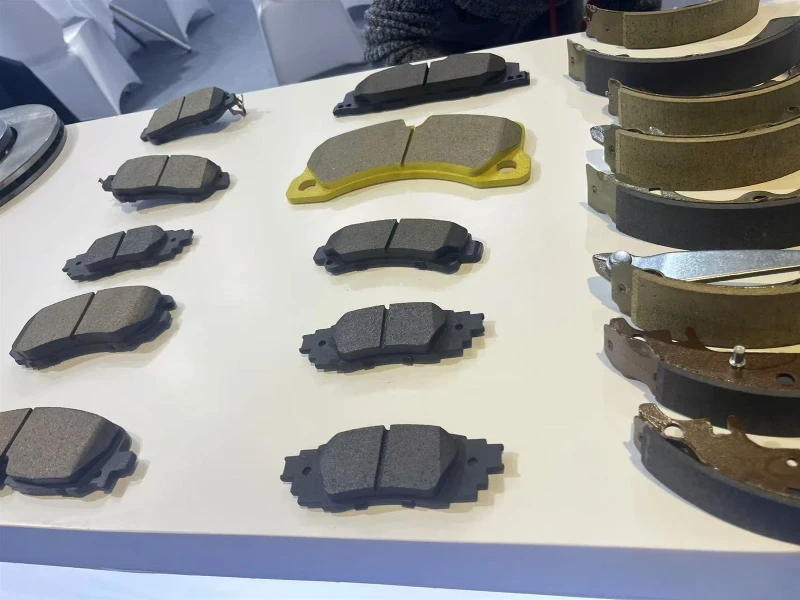
Brake pads are a key component of your car's braking system, and their damage can seriously affect driving safety. Here are some signs of brake pad damage:
Abnormal performance when braking
1. Brake noise
Sharp and shrill sound: When the brake pads are worn to a certain extent, a sharp and shrill metallic friction sound may be emitted when braking. This is because the friction material of the brake pads has worn thin, and the backing plate is in direct contact with the brake disc to produce the sound.
2. Low scraping sound: If you hear a low scraping sound, there may be hard spots or impurities on the surface of the brake pads, or there may be foreign objects stuck between the brake pads and the brake disc.
3. Brake Shaking
When the brake pads are unevenly worn or the brake disc is deformed, the brakes will feel obvious shaking. This shaking is usually transmitted from the brake pedal to the steering wheel and the car body, affecting driving comfort and safety.
4. Weak braking
If you find that the brake pedal needs to be pressed deeper than usual to achieve the same braking effect, or that the braking distance is significantly longer, this may be caused by the brake pads being badly worn.
5. Longer brake pedal travel
Under normal circumstances, the travel of the brake pedal is relatively fixed. However, when the brake pads are badly worn, the travel of the brake pedal will become longer. This is because when the brake pads are worn, the brake system needs more travel to push the brake pads into contact with the brake discs to achieve braking.
Appearance Inspection
1. Thinning of brake pad thickness
By observing the thickness of the brake pads, you can visually judge the degree of wear. Generally speaking, the thickness of new brake pads is around 10 - 15 mm. When the thickness of the brake pads wears down to less than 3mm, it is time to replace them. You can use a caliper or ruler to measure the thickness of the brake pads, or you can look at the wear indicator on the brake pads to determine this.
2. Uneven wear on the brake pad surface
If the surface of the brake pads show obvious uneven wear phenomenon, such as one side of the wear is serious while the other side of the wear is lighter, this may be the brake caliper failure, resulting in uneven pressure between the brake pads and brake discs. This situation will not only affect the braking performance, but also accelerate the wear of the brake pads, you need to check and repair the brake caliper in time.
3. Brake pad edge cracking or detachment
Brake pads may crack or fall off due to high temperature, high pressure and friction during long-term use. This situation will seriously affect the performance and safety of the brake pads, once found should be replaced immediately.
Other Related Signs
1. Dashboard brake warning light comes on
Nowadays, many cars are equipped with a brake system failure warning light, when the brake pads wear to a certain extent or other faults in the brake system, the warning light will come on. If you see the brake warning light on the dashboard, you should immediately stop the car to check the brake system, do not continue to drive to avoid danger.
2. Smell the burning odour
When the brake pads are badly worn or the brake system is malfunctioning, high temperatures may be generated when braking, causing the brake pads or discs to emit a burning smell. If you smell this odour, stop the car immediately and check the brake system to find out where the problem lies and solve it in time.