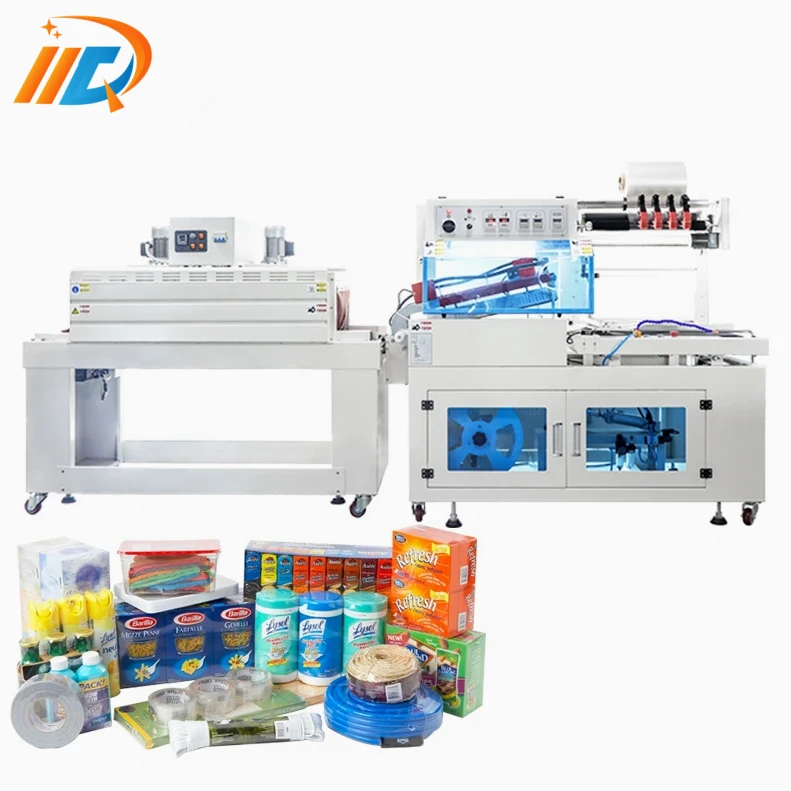
The heat shrink process is a technology that takes advantage of the fact that thermoplastic materials shrink when heated to package, protect or shape objects.
Principle of the process
Molecular chain movement: the molecular chain of thermoplastic materials is in a relatively fixed state at room temperature, but when subjected to heat, the thermal movement of the molecular chain is intensified, the intermolecular force is weakened, and the molecular chain becomes more active and is able to rearrange and adjust.
Shrinkage recovery: When the material is heated to a certain temperature, it will soften and have a certain degree of plasticity, at this time it is stretched and other operations, the molecular chains will be orientated along the stretching direction. When the heating source is removed and the material cools down, the molecular chains try to return to their original curled state, thus generating contraction forces that tightly wrap the material around the surface of the object to be treated or achieve the desired shrinkage moulding effect.
Procedure
Material Preparation: According to the shape, size and use requirements of the object to be treated, select the appropriate heat shrinkable material and cut it or make it into the corresponding packaging forms, such as shrink film, shrink tubes, etc.
Sleeving or wrapping: Sleeve or wrap the prepared heat-shrinkable material on the object to be treated, make sure that the material and the surface of the object fit tightly and minimise gaps and folds.
Heating: Use heating equipment such as hot air guns, heat shrink tunnel ovens, ovens, etc. to heat the object with heat shrink material. The heating temperature and time are adjusted according to the type and thickness of the material, generally the temperature is between 100℃ and 200℃, and the heating time varies from a few seconds to tens of seconds. During the heating process, the heat-shrinkable material will gradually shrink and tightly wrap around the surface of the object.
Cooling and shaping: After heating, stop heating and let the object cool naturally or use air cooling, water cooling and other ways to accelerate the cooling. During the cooling process, the heat-shrinkable material will be cured and shaped to maintain the contracted shape, completing the whole heat-shrinkable process.
Application Fields
Packaging industry: used for various products of single package, collection of packaging and shaped packaging, such as beverage bottles, cans of the collection of packaging, electronic products, toys, individual packaging, etc., can effectively protect the product, improve the sealing and aesthetics of the product, and at the same time, easy to transport and sales.
Wire and cable industry: the use of heat shrinkable tubes for insulation protection and sealing of wire and cable joints and terminals, preventing wire and cable from moisture, oxidation and short-circuiting, and improving the service life and safety of wires and cables.
Automobile Manufacturing Industry: It is used for wrapping of automobile interior parts, finishing and protection of wire harnesses. For example, heat shrink wrapping of leather or fabric for car seats to make them fit tightly and beautifully; using heat shrink tubes for finishing and protection of automotive wiring harnesses to prevent abrasion and aging of wiring harnesses.
Pipeline anti-corrosion industry: heat shrinkable tape or heat shrinkable sleeve is wrapped around the outer surface of the pipeline, which is heated to make it shrink and fit tightly on the surface of the pipeline, forming a layer of anti-corrosion and insulation, effectively preventing the pipeline from corrosion by the external environment and prolonging the service life of the pipeline.